This is a mechanical and electrical prep checklist, not an evacuation plan. For storm tracking, evacuation orders, and official shelter guidance, always follow Monroe County Emergency Management and the National Hurricane Center directly — nothing here substitutes for their instructions.
When should you start hurricane prep on your boat?
Before a storm is even named, ideally at the start of hurricane season (June 1 through November 30 in this region). Waiting until a storm is 72 hours out means competing with every other boat owner in the Keys for haul-out slots, dock space, and fuel — start your mechanical prep now, so the only thing left to do when a storm actually threatens is execute.
Is your engine actually ready to run when you need it most?
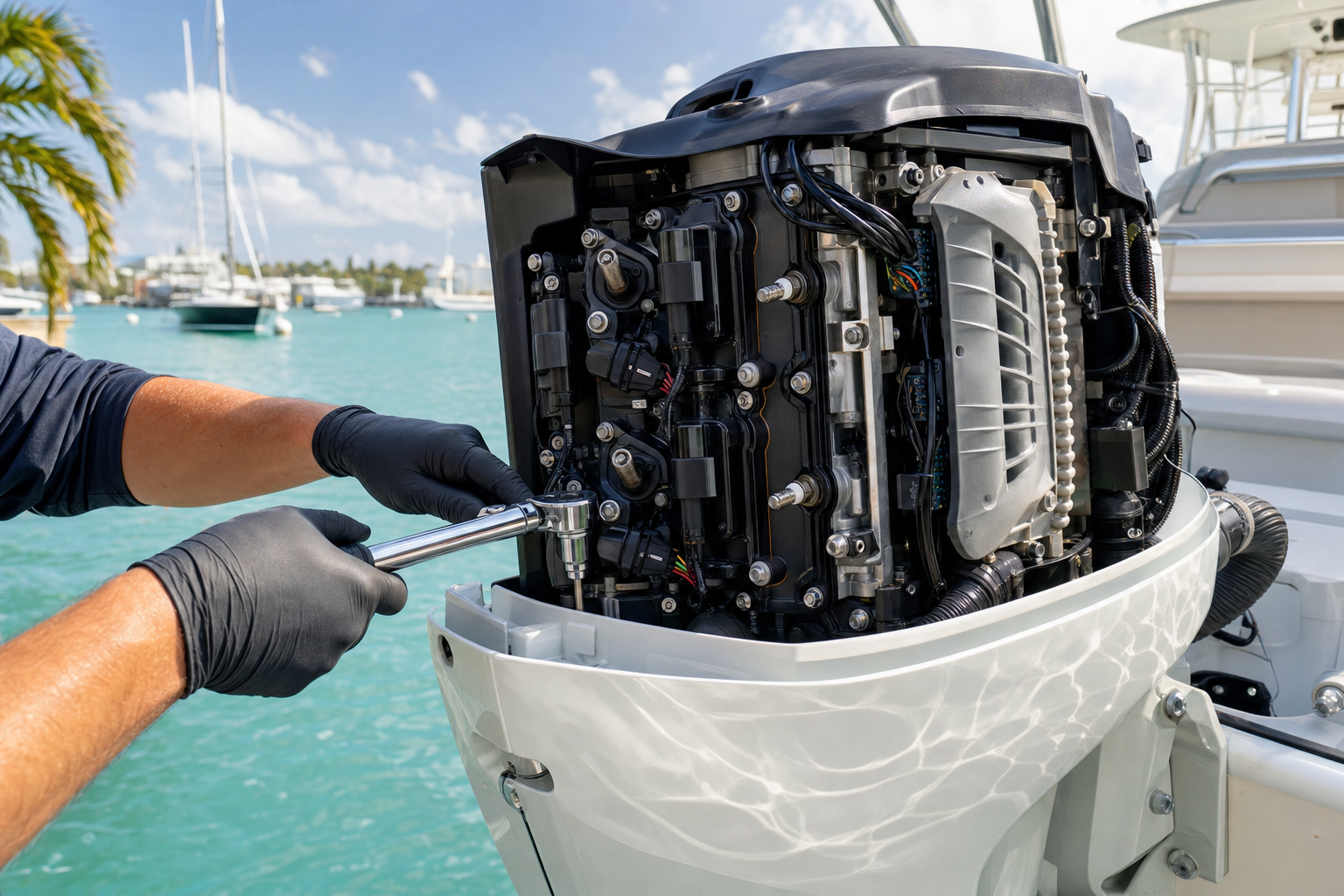
A hurricane isn't the time to find out your battery is weak or your fuel is contaminated. Before season starts:
- Have the charging system and battery tested — a boat that needs to relocate or run hard has to start the first time, every time
- Check fuel for water contamination, especially if the boat has sat for a while
- Confirm the cooling system and water pump are in good condition — an overheating engine during evacuation prep is the worst possible time for it
- Address any known no-start issues or rough-running symptoms now, not during storm week
What should you check in the electrical system before hurricane season?
Corrosion at battery terminals, bilge pump wiring, and float switches matters more than ever when a boat may sit unattended through heavy rain and storm surge. Test that bilge pumps actually cycle on and off correctly with the float switch — a bilge pump that doesn't work is one of the fastest ways a boat sinks at the dock during a storm, whether from rain or a rising tide.
How should dock lines and fenders be prepared?
Inspect dock lines for chafe and UV wear well before storm season — a line that's been fine all year can fail under storm-surge loads it's never seen. Have chafe gear and extra dock lines on hand so you're not searching for supplies during a pre-storm rush, when marine stores sell out fast.
Should you haul out or leave the boat in the water for a hurricane?
This depends on your specific boat, marina, and storm track, and it's ultimately a decision between you, your marina, and, if conditions and evacuation orders require it, the guidance of local officials — not something a general checklist can decide for you. What a technician can help with beforehand is making sure the engine, electrical system, and hull hardware are in good working condition no matter which option you choose, so the boat performs when it matters, whether that's running to a hurricane hole or riding it out secured at the dock.
What documentation should you have ready before a storm?
Photos of the boat's current condition (hull, engine, electronics, registration numbers), a copy of insurance policy information, and your marina or storage agreement, stored somewhere other than on the boat itself — a phone backed up to the cloud or a folder at home works. This matters for insurance claims regardless of how the storm goes.
What should you do to the engine and electrical systems right after a storm passes?
Before starting the engine, check for water intrusion, especially if the boat took on rain, surge, or spent time partially submerged. Running a flooded engine before it's inspected can cause more damage than the storm itself. If electrical components got wet, have them checked before they're powered up — corrosion sets in fast in the days right after a storm, and rushing to "just try it" is how a small problem becomes an expensive one.
Get your boat storm-ready at your dock
A pre-season mechanical and electrical check catches the small problems before they become the reason your boat can't run when you need it most. See Marine Electrical Services for battery, charging, and bilge pump work, or Services for the full scope of what we check.
Call or text (305) 832-1206, email info@3marinekw.com, or book online — well before the first named storm of the season, if you can.
---