A Mercury that won't start is rarely one single mystery cause — it's usually one of a short list of usual suspects, and salt air makes several of them more likely here than almost anywhere else. Here's what we check, in the order we check it.
Is it the battery or the starting circuit?
Start here because it's the fastest thing to rule out. A weak battery, a corroded terminal, or a bad ground connection can make an engine crank slowly or not at all — and in the Keys, corrosion at battery terminals and ground straps is one of the most common failure points we find, full stop.
A proper check includes battery voltage under load, terminal condition, and the ground path all the way back to the engine block — not just "the battery reads okay on a multimeter sitting still."
Could it be bad or stale fuel?
Yes, and it's especially common on boats that sit for weeks between runs — which describes a lot of Keys boats. Ethanol-blended fuel absorbs moisture over time, and stale fuel loses the volatility an engine needs to start clean. Water in the fuel (often visible as a separate layer in a clear fuel-water separator) is one of the most common no-start causes we see on boats coming off a slow month.
Is it a fuel delivery problem, not fuel quality?
If the fuel itself is fine, the next question is whether it's actually reaching the engine. A clogged fuel filter, a failing fuel pump, or air trapped in the line after a filter change can all mimic a "won't start" that looks electrical from the outside. This is where computer diagnostics earn their keep — Mercury's CDS G3 platform can show fuel pressure and pump activity in real time instead of guessing.
Could it be a spark or ignition problem?
Fouled spark plugs, a failed ignition coil, or corrosion inside a plug boot connector can all kill spark on one or more cylinders. On a multi-cylinder outboard, a no-start from ignition issues often shows up first as hard starting or a rough idle before it becomes a full no-start — so if your engine's been running rough lately, don't wait for it to quit completely.
Is it a safety lanyard, gear position, or sensor fault?
Modern Mercury outboards have safety interlocks — the engine won't start (or won't rev past idle) if the lanyard's disconnected, if it's not in neutral, or if certain sensors report a fault. These are easy for an owner to overlook and fast for a technician with the right diagnostic software to rule in or out.
What does a Mercury-certified diagnostic actually check that a generic scan doesn't?
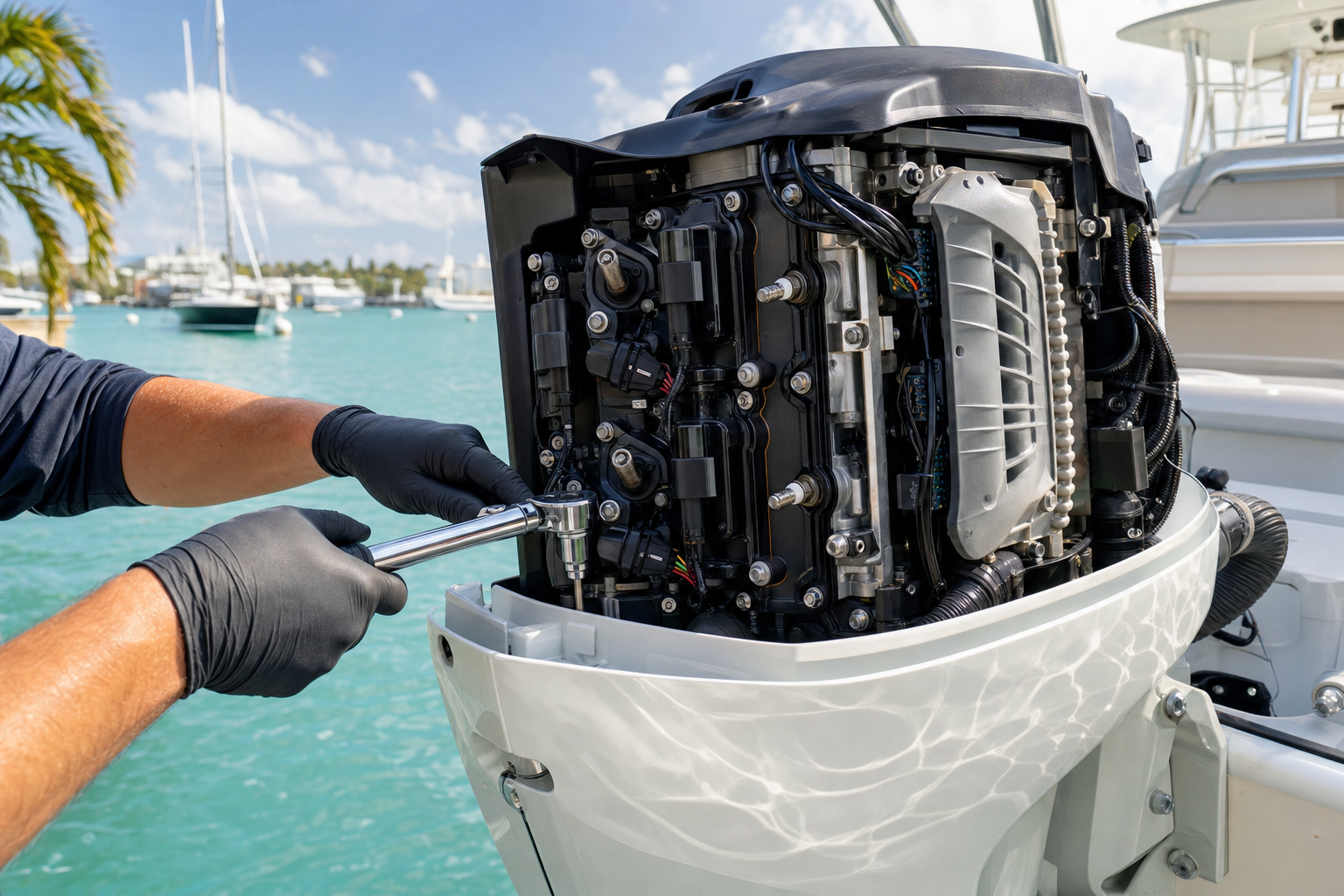
Mercury's CDS G3 software — the same platform Mercury dealers use — can pull fault codes, show live sensor data, and confirm whether components like the fuel pump, ignition coils, and safety switches are actually functioning, rather than relying on visual inspection alone. That's the difference between swapping parts on a guess and fixing the actual fault the first time.
When is it more than a no-start — when should you worry about the powerhead?
If the engine cranks strong, has fuel and spark confirmed, and still won't fire, or if it starts and dies immediately, the diagnostic moves toward compression and internal engine health. Compression and leak-down testing rules a powerhead problem in or out — see Engine Repair & Overhaul for what that process covers. This isn't the most common cause of a no-start, but it's the one you don't want to guess about.
Get it diagnosed right, at your dock
A no-start doesn't have to mean a tow. Our Mercury Marine Certified technician brings CDS G3 diagnostics and the common parts to fix most no-start calls in a single dockside visit anywhere in Key West and the Lower Keys. See Mercury Diagnostics & Repair for the full scope, or Marine Electrical Services if the trail leads to wiring or corrosion.
Call or text (305) 832-1206, email info@3marinekw.com, or book online.
---